
What I found on the back of my 'healthy' brown bread made me feel like an idiot.
By Soham Shinde
6/19/20262 min read
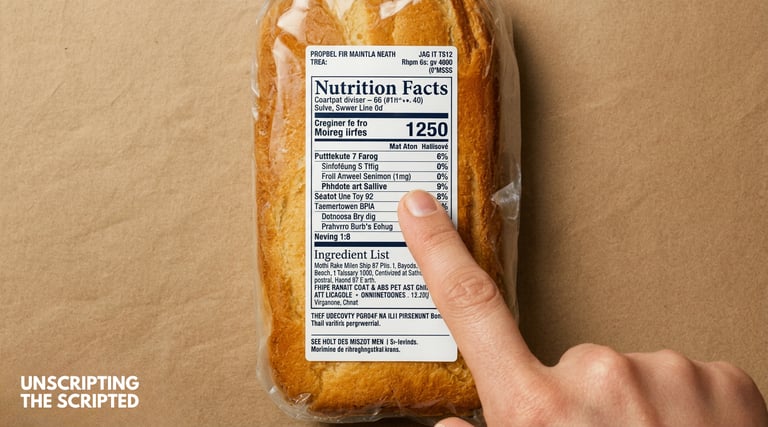
I've been buying the same brown bread for probably three years. The packaging is a nice earthy brown. There's a wheat stalk illustration on it. It says 'multigrain' in large letters on the front. There's a little green tick that says 'source of fibre.'
I felt good about it every time I put it in the trolley.
Then someone told me to flip it over and read the actual ingredient list. First ingredient: 'Refined wheat flour (Maida).'
I stood in the supermarket aisle for a genuinely embarrassing amount of time.
How to actually read the ingredients list
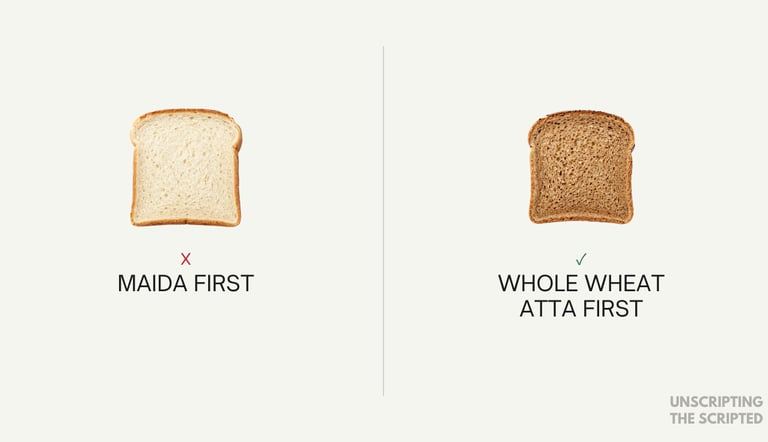
Ingredients in India are listed by weight, highest first. This means the first ingredient is what the product is mostly made of. If the first item is "Refined wheat flour" or "Maida," the product is primarily white flour, regardless of what the front says.
What you want to see as the first ingredient: "Whole wheat flour" or "Whole wheat atta."
"Multigrain" is not the same as "whole grain." A bread can contain 5 different grains, all refined, and legitimately be called multigrain. The number of grains is irrelevant. What matters is whether they're whole or refined.
What whole grain actually gives you that refined doesn't
When wheat is refined to make maida, the bran and germ are stripped away. What remains is primarily the starchy endosperm. In the process, most of the fibre is removed, along with B vitamins (B1, B3, B6), magnesium, zinc, iron, and the healthy fats in the germ.
Whole wheat bread made from actual whole wheat flour retains all of this. The practical effects:
• Higher fibre: 6-8g per 100g vs 2-3g for white. This slows digestion, reduces blood sugar spikes, and keeps you full longer.
• Lower glycaemic index: Roughly 65-70 for genuine whole wheat vs 70-75 for white bread. The difference is meaningful for sustained energy.
• More micronutrients: B vitamins, magnesium, and zinc are all involved in energy metabolism.
A 2021 BMJ meta-analysis found high whole grain intake associated with a 20-30% lower risk of cardiovascular disease and type 2 diabetes vs low whole grain intake. That's a robust finding from a robust data set.
One more thing: roti is winning
If you're Indian and eating rotis made from chakki-ground whole wheat atta, I have good news: you're already eating whole grain bread. Whole wheat roti is nutritionally superior to almost every commercial "brown bread" on the market. The thing you've been eating your whole life is genuinely better than the premium packaged alternative.
The supplement and packaged food industry has spent a lot of effort making traditional Indian food feel inadequate. Often it isn't.
Key Takeaways
• Most commercial 'brown bread' in India is white bread (maida) with caramel colour added
• Ingredients are listed by weight — first ingredient = what it's mostly made of
• You want 'whole wheat flour' or 'whole wheat atta' as the FIRST ingredient
• 'Multigrain' does not mean whole grain — grains can all be refined
• Whole wheat has more fibre, lower GI, and more B vitamins than refined
• Whole wheat roti is nutritionally better than most commercial brown breads