High Fibre Foods in India: The 30g a Day You're Missing, The 30 Grams Most Indians Miss: A Plain Guide to Fibre
.Most Indians eat half the fibre they need. Here are the high fibre foods, from bajra to dal, that close the gap and keep your gut and blood sugar steady.
Shubham Desai
7/20/20263 min read
The question I could not answer
A nutritionist friend once asked me how much fibre I ate in a day. I opened my mouth to answer and realised I had absolutely no idea. So we walked through a normal day of mine: white bread toast, a rice-heavy lunch, a couple of biscuits with chai, roti and sabzi at night. She did the rough maths and it came to nowhere near where it should be. That conversation is the reason I now think about fibre at all.
Fibre is the least glamorous thing on your plate and quietly one of the most important.
Here is what it does, why the average Indian plate falls short, and how to fix it without overhauling your life. What fibre actually is Fibre is the part of plant food your body cannot digest, and it comes in two types. Soluble fibre dissolves into a gel in your gut, which slows digestion, helps keep blood sugar steadier and lowers cholesterol. Insoluble fibre does not dissolve; it adds bulk and keeps things moving so you stay regular. You want both, and most whole plant foods give you a mix.
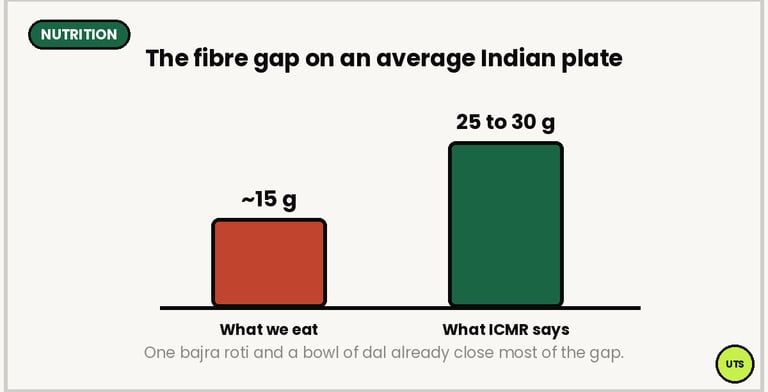
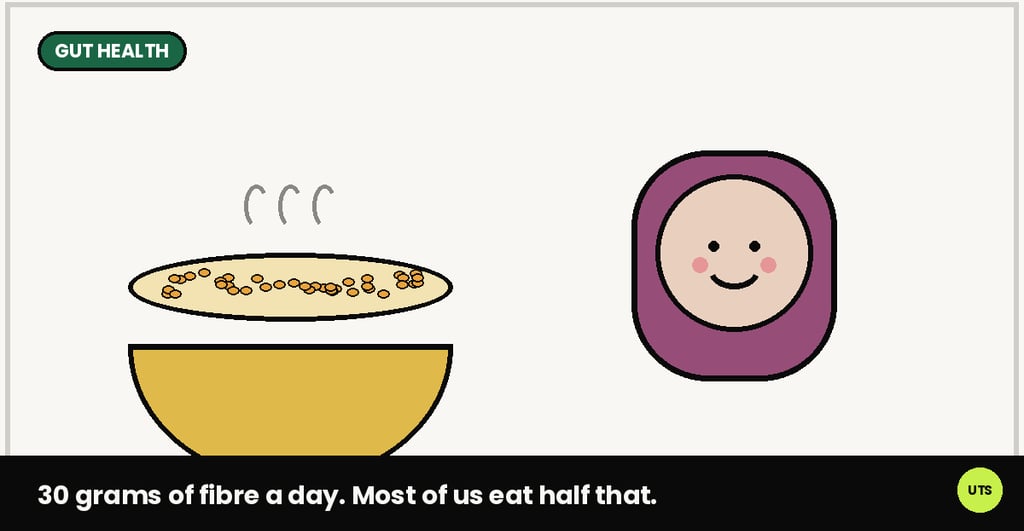
How much you actually need The ICMR-NIN 2020 guidelines recommend about 30 grams of fibre per 2000 kcal for Indian adults. Surveys suggest the average intake is closer to 15 grams a day, roughly half of the target. The gap is widest for people eating a lot of refined grains: maida, white rice and processed snacks strip out most of the fibre that was there to begin with.
Why it is worth caring about Fibre is the main food source for the good bacteria in your gut. When you feed them fermentable fibre from dals, millets and vegetables, they grow and produce compounds that support your gut lining and, increasingly, look linked to everything from immunity to mood. Beyond the gut, a higher fibre diet is tied to lower risk of heart disease, steadier blood sugar and easier weight control, largely because fibre keeps you full for longer.
Where to get it, the Indian way You do not need imported chia seeds. The highest-fibre grains in an Indian kitchen are the millets: bajra carries around 11 grams of fibre per 100 grams and jowar around 10, far ahead of white rice.
Add dals and legumes like moong, chana and rajma, vegetables like bhindi, lauki and greens, and whole fruit eaten with the skin. A day built on these gets you most of the way to 30 grams without trying. How to add it without a diet overhaul Start with swaps, not rules.
Trade one white rice meal for a bajra or jowar roti. Make sure a dal or legume shows up daily. Eat fruit whole instead of juicing it, since juicing throws away the fibre. And two quiet caveats: increase fibre gradually so your gut adjusts without bloating, and drink more water alongside, because fibre works best when it has water to hold.
Key Takeaways • Fibre comes in two forms: soluble (steadies blood sugar and cholesterol) and insoluble (keeps you regular). You want both. • ICMR-NIN 2020 recommends about 30 grams a day; the average Indian eats closer to 15. • Refined grains like maida and white rice are the main reason the gap exists. • Fibre feeds your gut bacteria and is linked to better heart health, blood sugar and weight control. • Best Indian sources: bajra and jowar millets, dals, legumes, vegetables and whole fruit with the skin. • Add it gradually and drink more water to avoid bloating
Sources Nutrient Requirements for Indians, ICMR-NIN 2020 (RDA). https://www.nin.res.in/rdabook/brief_note.pdf Recommended Dietary Allowances, ICMR 2020 guidelines review. https://ijfcm.org/archive/volume/10/issue/1/article/14656 Dietary fibre RDA, ICMR-NIN 2020 summary. https://metabolichealthdigest.com/nutrientrequirements-for-indians-icmr-nin-2020/