Antioxidants: Why Your Plate Beats the Pill
Most Indians eat half the fibre they need. Here are the high fibre foods, from bajra to dal, that close the gap and keep your gut and blood sugar steady.
Shubham Desai
7/20/20263 min read
The bottle that almost got me I was standing in a chemist aisle holding a bottle that promised to fight free radicals and slow ageing.
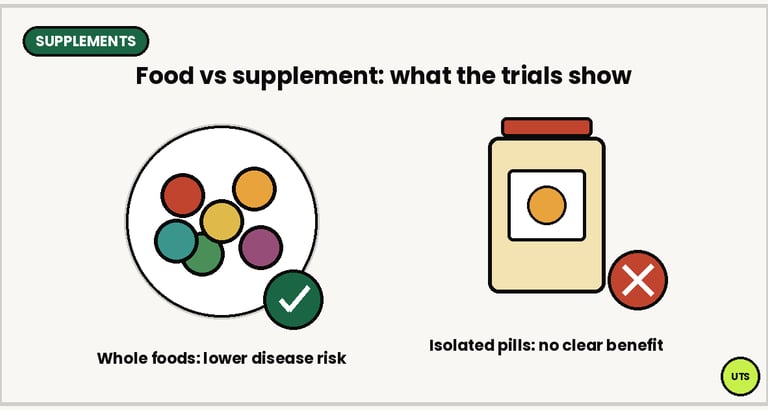
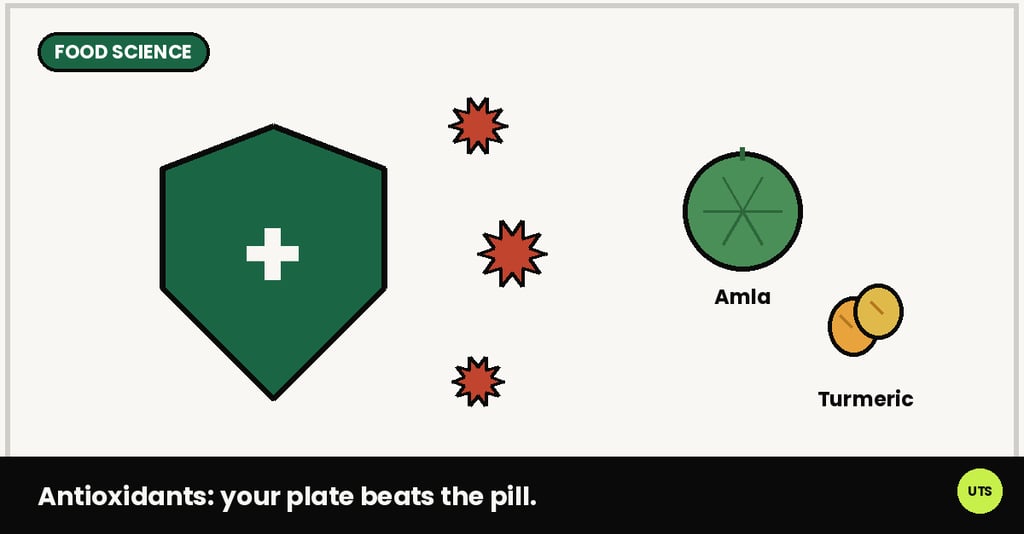
It had a leaf on the label and a price that felt like a bargain for eternal youth. I nearly bought it. Then I remembered what the actual research says about antioxidant supplements, put it back, and picked up a bag of amla on the way home instead. Here is why. What free radicals and antioxidants really are Your body constantly produces free radicals, unstable molecules that can damage cells, as a normal byproduct of turning food into energy. Antioxidants are compounds that neutralise them. This is real biology, which is exactly why the supplement industry loves it. The leap that does not hold up is the assumption that if some antioxidants in food are good, then concentrated antioxidants in a pill must be better. What the large trials actually found This has been tested seriously.
Rigorous studies involving more than 100,000 people have looked at whether antioxidant supplements prevent chronic diseases like heart disease and cancer. In most cases they did not reduce the risk at all. Worse, high-dose beta-carotene was found to increase the risk of lung cancer in smokers. In 2022 the US Preventive Services Task Force recommended against using betacarotene or vitamin E supplements to prevent cancer or heart disease. The pill version of a good idea turned out to do nothing helpful, and sometimes harm.
Why food works when pills do not
The likely reason is that fruits and vegetables are not just one antioxidant. They are complex packages of hundreds of compounds, vitamins and minerals that seem to work together in ways a single isolated chemical cannot copy. When researchers pull one antioxidant out, bottle it at a high dose and test it alone, the magic does not travel. People who eat more fruits and vegetables clearly have lower rates of chronic disease. People who take antioxidant pills, by and large, do not get the same benefit.
The Indian foods that already do this You are surrounded by some of the best antioxidant foods in the world. Amla is a standout, with a polyphenol content several times higher than turmeric in lab measures. Turmeric itself gives you curcumin, a well-studied antioxidant and antiinflammatory compound. Add leafy greens, tomatoes, coloured vegetables, and even the polyphenols in a cup of chai, and you are already eating the thing the bottle was trying to sell you, in the form your body actually uses.
So should you ever take a supplement? There is a difference between chasing antioxidants for vague protection and treating a diagnosed deficiency. If a blood test shows you are low on a specific nutrient, a targeted supplement under medical guidance makes sense. A specific eye condition, age-related macular degeneration, is one narrow case where a particular formula has evidence. But for the everyday goal of staying healthy and ageing well, the science is refreshingly boring: eat a colourful plate, and save your money on the miracle bottle.
Key Takeaways • Free radicals and antioxidants are real biology, but that does not mean antioxidant pills work. • Trials across 100,000-plus people found antioxidant supplements mostly did not prevent chronic disease. • High-dose beta-carotene raised lung cancer risk in smokers; USPSTF advises against beta-carotene and vitamin E for prevention. • Whole foods likely work because they are complex mixtures, not single isolated compounds. • Indian antioxidant powerhouses include amla, turmeric, leafy greens, tomatoes and chai polyphenols. • Supplements have a role only for a diagnosed deficiency or specific conditions, under medical guidance.
Sources Antioxidant Supplements: What You Need To Know, NCCIH (NIH). https://www.nccih.nih.gov/health/antioxidant-supplements-what-you-need-to-know Antioxidants and Cancer Prevention, National Cancer Institute. https://www.cancer.gov/aboutcancer/causes-prevention/risk/diet/antioxidants-fact-sheet Phenolic antioxidants in amla and turmeric, ScienceDirect. https://www.sciencedirect.com/science/article/abs/pii/S0889157506000056